
Call us 24/7+86 18030109652
My Header Store Notice
Call us 24/7+86 18030109652

Caterpillar CEO on China trade war fears: We’re ‘still meeting our forecast’

Key Points

“We’ve navigated trade tensions in our 94-year history, this is not new for us,” Caterpillar CEO Jim Umpleby says.

“We’re very comfortable still meeting our forecast dealing with those challenges so again it’s a part of what we do,” he says in a “Mad Money” interview.

“The Caterpillar team improved operating margin from 11% in 2014 to 16% in 2018 in just 4 years,” he says.

Caterpillar CEO Jim Umpleby expressed confidence about his company’s strategy and prospects, despite the prolonged trade war between the world’s largest economies.

“We’ve navigated trade tensions in our 94-year history, this is not new for us,” he told “Mad Money” host Jim Cramer in a Thursday interview.

China makes up between 5% and 10% of Caterpillar’s sales, particularly in hydraulic excavators, or demolition vehicles. Umpleby said that business “continues to be strong” despite an ongoing trade dispute between the countries that has seen tariffs levied on both sides.

“We saw a big increase there in 2017, 2018, and it’s continuing in 2019 so far,” he said. “We’re very comfortable still meeting our forecast dealing with those challenges, so, again, it’s a part of what we do. We’ve seen this before, we’ve been through it, we’ll manage our way through this situation.”

The heavy machinery manufacturer is seeing results of its new strategy for profitable growth that it launched in early 2017, around the same time that Umpleby became chief. Management has focused on improving operating margins and building its services business, he said.

Umpleby said Caterpillar bested its 2014 margins in 2018 — it produced $55 billion worth of sales each year.

“The Caterpillar team improved operating margin from 11% in 2014 to 16% in 2018 in just 4 years,” he explained. “Last year we achieved record earnings per share at that $55 billion sales level that was 17% below what we had in 2012 at $66 billion [sales].”

Last month, Caterpillar announced its plans to double down on its digital capability, Umpleby said. The earth mover maker now has 850,000 connected machines and engines around the world, a 70% increase from its levels in 2017, he said. It’s a way for Caterpillar to boost its services operations.

Caterpillar wants to double the $14 billion in service revenue it produced in 2016 in the next decade.

“We’re going for 1 million connected assets by the end of the year,” he said. “And services is … everything that we do with a customer after we sell a new piece of equipment, and we’re working closely with our dealers to find more ways to add customer value through services.”

Shares of Caterpillar climbed more than 2.3% during Thursday’s session. The stock is up 5.16% this year, but is off more than 16% from its October high of about $159.
Related product recommendations:
1MRB200064/C
500PB101  1MRB178009R0001
500PB101 1MRB200064/C
500PB101  1MRB178009R0001
500CSP04
500CSP04 1MRB150051R2
1MRB150051R2  1MRB150051R2
500CSP04  HE401314/0002
500CMP04 
1MRB150051R1
500CMP04  1MRB150051R1
500CMP04  1MRB150051R1 HE401314/0001
more……
Connector function-EP-SM.MAN.6284 | Issue 1.10

The below table describes the function of the connectors on the back side of the Controller backplane.

IO Chassis for non-redundant IO modules (Safety Manager)

The IOCHAS-0003S is a chassis for up to 18 non-redundant IO modules. It consists of the following components:

The above figure shows the front side of an empty IOCHAS-0003S with the front-cover raised. A 19″ chassis has 21 slots for modules (each 4TE wide). These slots are numbered 1 to 21, starting at the lefthand side of the chassis.

In the IOCHAS-0003S, slots 1 to 18 are available for IO modules.Honeywell CC-TDOD51 - Advanced Digital Output Module

IO Housing

The IO housing is specifically designed for Safety Manager.

It is a 19″ based housing.

A coverplate assembly at the front of the chassis shields the flatcables of the IO modules. This cover can be swung upwards to access the flatcables. To swing the cover upwards, unlock it by moving the two locking slides horizontally towards the middle of the chassis. The backside of the IO cover assembly provides room for a tagnumber assignment drawing.

The backside of the IO housing is covered by an IO back cover plate that can be removed by rotating the half-turn locking screw anti-clockwise (see the below figure).

IO cable clamp support (with tie wrap) at the back of the IO housing leads all cables towards the side of the IO chassis.

Horizontal IO bus backplane for non-redundant IO

Figure 6-48 shows a front view of a filled IOCHAS-0003S with the cover opened.

Figure 6-49 shows a front view of a filled IOCHAS-0003S with the cover closed.

The below table lists the connectors present on the IOBUS-HBS.

IO Housing

The IO housing is specifically designed for Safety Manager.

It is a 19″ based housing.

A cover plate assembly at the front of the chassis shields the flatcables of the IO modules. This cover can be swung upwards to access the flatcables. To swing the cover upwards, unlock it by moving the two locking slides horizontally towards the middle of the chassis. The backside of the IO cover assembly provides room for a tag number assignment drawing.

The backside of the IO housing is covered by an IO back cover plate that can be removed by rotating the half-turn locking screw anti-clockwise (see the below figure)

IO cable clamp support (with tie wrap) at the back of the IO housing leads all cables towards the side of the IO chassis.

The pin allocation of each respective input and output module can be found in the module datasheet.

Figure 6-54 shows the pin mapping from an IO chassis connector at the front to both a SIC cable (CNx) connector and a converter (Px) connector at the back of the IO Chassis.

Horizontal IO bus backplane for redundant IO

Figure 6-55 shows a front view of a filled IOCHAS-0003R with the cover opened.

Figure 6-56 shows a front view of a filled IOCHAS-0003R with the cover closed.

Power supplies

This chapter describes the different types of power supplies and power feeders that can be used with the Safety Manager.

The following power supplies on AC plant power are described:

Power supply See

PSUNI2424 PSUNI2424

PSU-UNI2450U PSU-UNI2450U

PSU-UNI4825U PSU-UNI4825U

PSU-UNI6020U PSU-UNI6020U

PSU-UNI11011U PSU-UNI11011U

PSU-UNI12010U PSU-UNI12010U

RUSPSU-R RUSPSU-R

RUSPSU-S RUSPSU-S

PSU-UNI2412 PSU-UNI2412U

PSUTA-0001 PSUTA-0001

QUINT4-PS/1AC/24DC/20 QUINT4-PS/1AC/24DC/20

QUINT4-PS/1AC/24DC/20/+ QUINT4-PS/1AC/24DC/20/+

The following power feeders on DC plant power are described:

Power feeder See FDOVP-2450 FDOVP-2450 FEEDER-24R FEEDER-24R FEEDER-48R FEEDER-48R

General info about power supplies

Power supplies are used to convert different V AC input voltages to a specific V DC output voltage, which is used by Safety Manager.

The below table shows all suitable power supplies and their input and output voltages.

Power supplies and their input and output voltages

Power supply Input feeder Output feeder

PSU-UNI2450 110-240 V AC 24 V DC, 50 A

PSU-UNI4825U 110-240 V AC 48 V DC, 25 A

PSU-UNI6020U 110-240 V AC 60 V DC, 20 A

PSU-UNI11011U 110-240 V AC 110 V DC, 11 A

The below table also shows the available power feeders required to process DC plant power. They can be wired identical to the power supplies.

Power feeders and their input and output voltages

FEEDER-24R 24 V DC 24 V DC, 63 A

FEEDER-48R 48 V DC 48 V DC, 63 A

In addition to these, Power Supply Unit PSU-240516 is located in the Controller chassis. It is described in the chapter about Control Processor modules, in section PSU-240516.

Non-redundant power supply units (N configuration)

In this configuration the number of PSUs chosen matches the required power. If the system has a nonredundant Controller there may be no need for redundancy in the PSU configuration.

AC power feeders supply the power for the entire Safety Manager system. To limit the load on the feeder, you are advised to put no more than 2 power supplies on one feeder.

This configuration has the following characteristics:

The PSU(s) deliver(s) sufficient power for Safety Manager.

A failure in one of the PSUs may lead to a system stop with undefined results.

A failure in the mains power leads to a system stop with undefined results

See “Power Supply Units configurations (2 examples for each configuration)” on the facing page for details.
Related product recommendations:
Bently Nevada 3500/15 125840-02
ICS TRIPLEX T9801
Agilent AT-PWR4
GE 36B605633AAG01
Pfeiffer Vacuum D-35614 PKR251
Allen Bradley 836T-D450JX119
Schneider Modicon 140DDO35300
Rockwell Automation A-B 1492-CJP3-2-BIEC 
ABB 3HAC037824-001
ABB 3HAC021852-001
GE Fanuc IS220PAOCH1B
Allen Bradley 1747-M11
More…

Load cells Installation arrangements

ABB offers a complete range of roll force load cells of different types and sizes. Connector cables to be preferred to fixed cables.Step-by-step assembly of our prestressed Load Cell Package

Load cell packages

When the load cell is positioned under the lower back-up roll bearing, which is the most exposed position, we can offer a pre-stressed package with lower pressure plate, load cell, frame and upper pressure plate.

The safe and compact Load Cell Package secures easy and correct installation. You increase the possibility of accurate measure, and can count on a longer lifetime and lower maintenance costs.

ABB has many years of experience of installing load cells in all types of rolling mill.

To achieve the best possible measurement results, certain basic rules must be observed during the installation of the load cell:

The entire force must pass through the load cell.

• The force must be measured as close to the source of the force (the roll gap) as possible.

• The load cells must be protected to the greatest possible extent from large bending, lateral and torsional forces.

Circular load cells

PFVL 141C, measurement range 2.0–60 MN

Standard sizes and cable lengths

Load cells are manufactured in the standard range as below.

Select as follows:

• Determine the load for which the load cell is to be used and choose from the table the next higher value in the standard range.

When ordering, please state:

• Type designation

• Nominal load

Example

Nominal load 20 MN per load cell. Select 20 MN load cell, dimension OD=560 mm, ID=510 mm. PFVL 141C, 20 MN

Rectangular load cells

PFVL 141V, measurement range 0.63–60 MN

Standard sizes and cable lengths

Load cells are manufactured in the standard range as below.

Select as follows:

• Determine the load for which the load cell is to be used and choose from the table the next higher value in the standard range.

• Determine either the width or length of the load cell and calculate the other dimension using the following formula:

– L x W x 0.0001 = F

L = load cell length in mm

W= load cell width in mm

F = nominal load of load cell in MN (taken from the standard series in the table)

Width and length are rounded up to the next higher value in the table.

When ordering, please state:

• Type designation

• Nominal load

• Width and length

Example

With a nominal load of 14 MN and a width of 370 mm the length will be 390 mm (rounded up from 378 mm). PFVL 141V, 14 MN

L=390 mm, W=370 mm

Annular load cells

PFVL 141R, measurement range 2.0–28 MN

Standard sizes and cable lengths

Load cells are manufactured in the standard range as below.

Dimensions can be designed to order on request.

Select as follows:

• Determine the load for which the load cell is to be used and choose from the table the next higher value in the standard range. We can customize load cells if a standard load cell is not suitable for a particular application.

• To calculate the load F for non-standard load cells:

F = ( D3 2 π 4 – D2 2 π 4 ) × 0.0001 MN.

Example

PFVL 141R, 10 MN

D2

=385 mm

D3=525 mm
Related product recommendations:
ABB 3BHE018809R0001
MKS MC20A-30134 
Bentley Nevada 1900/27-01-00 
ABB 3BHE022287R0101 UCD240 A101
Emerson Ovation 1C31150G01
SIEMENS 6AV6642-0AA11-0AX1
GE IDP10-T22B21F-M1
Emerson 3A99732H03
Kawasaki 50632-1066
Schneider Electric AS-J890-002
AVENTICS ED07-SE8C
Allen-Bradley 2711-T10G8
More…

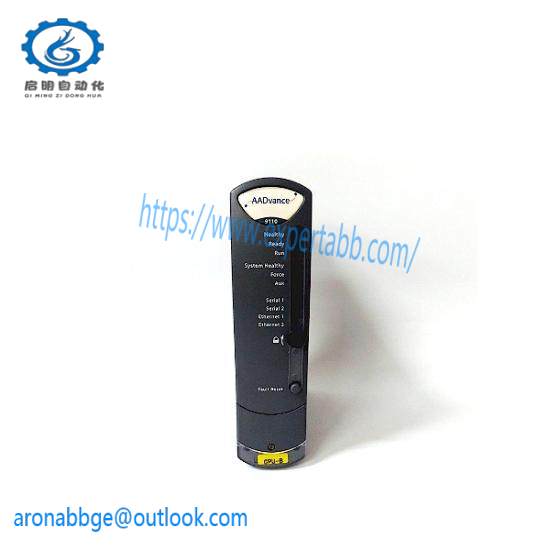
breakdown voltage-T9110

The maximum voltage (AC or DC) that can be continuously applied between isolated circuits without a breakdown occurring.

BS EN 54 A standard forfire detection and fire alarm systems.

BS EN 60204 A standard forthe electrical equipment of machines, which promotes the safety of persons and property, consistency of control response and ease of maintenance.

bus A group of conductors which carry related data. Typically allocated to address, data and control functions in a microprocessor-based system.

bus arbitration A mechanism for deciding which device has control of a bus.

CIP Common Industrial Protocol. A communications protocol, formally known as ‘CIP™ over Ethernet/IP™’, created by Rockwell Automation for the Logix controller family, and which is also supported by the AADvance controller. AADvance controllers use the protocol to exchange data with Logix controllers. The data exchange uses a consumer/producer model.

clearance The shortest distance in air between two conductive parts.

coding peg A polarization key, fitted to the T9100 processor base unit and to each termination assembly, which verifies that only a module of the correct type may be fitted in a particular slot. Part number T9903.

coil In IEC 61131-3, a graphical component of a Ladder Diagram program, which represents the assignment of an output variable. In MODBUS language, a discrete output value.ICS TRIPLEX T9110 - Industrial Control Module

Compiler Verification Tool (CVT) An automatic software utility that validates the output of the application compilation process

configuration A grouping of all the application software and settings for a particular AADvance controller. The grouping must have a ‘target’, but for an AADvance controller it can have only one ‘resource’.

consumer The consuming controllerrequests the tag from the producing controller.

contact A graphical component of a Ladder Diagram program, which represents the status of an input variable.

continuous mode Where the Safety Instrumented Function in the Safety System is continually maintaining the process in a safe state.

controller A logic solver; the combination of application execution engine and I/O hardware.

controller system One or more controllers, their power sources, communications networks and computers.

coverage The percentage of faults that will be detected by automated diagnostics. See also ‘SFF’.

creepage distance The shortest distance along the surface of an insulating material between two conductive parts.

cross reference Information calculated by the AADvance® Workbench software or AADvance®- Trusted® SIS Workstation software relating to the dictionary of variables and where those variables are used in a project.

D

data access (DA) An OPC data type that provides real-time data from AADvance controllers to OPC clients.

de-energize to action A safety instrumented function circuit where the devices are energized under normal operation. Removal of power de-activates the field devices.

dictionary The set of internal input and output variables and defined words used in a program.

discrepancy A condition that exists if one or more of the elements disagree.

DITA Digital input termination assembly.

DOTA Digital output termination assembly.

E

element A set of input conditioning, application processing and output conditioning.

energize to action A safety instrumented function circuit where the outputs and devices are deenergized under normal operation. Application of power activates the field device.

EUC Equipment Under Control. The machinery, apparatus or plant used for manufacturing, process, transportation, medical or other activities.

expansion cable assembly A flexible interconnection carrying bus signals and power supplies between AADvance base units, available in a variety of lengths. Used in conjunction with a cable socket assembly (at the left hand side of a base unit) and a cable plug assembly (at the right hand side of a base unit).

F

fail operational state A state in which the fault has been masked. See ‘fault tolerant’.

fail safe The capability to go to a pre-determined safe state in the event of a specific malfunction.

fault reset button The momentary action push switch located on the front panel of the T9110 processor module.

fault tolerance Built-in capability of a system to provide continued correct execution of its assigned function in the presence of a limited number of hardware and software faults.

fault tolerant The capability to accept the effect of a single arbitrary fault and continue correct operation.

fault warning receiving station A centre from which the necessary corrective measures can be initiated.

fault warning routing equipment Intermediate equipment which routes a fault warning signal from the control and indicating equipment to a fault warning receiving station.

field device Item of equipment connected to the field side of the I/O terminals. Such equipment includes field wiring, sensors, final control elements and those operator interface devices hard-wired to I/O terminals.

fire alarm device A component of a fire alarm system, not incorporated in the control and indicating equipment which is used to give a warning of fire — for example a sounder or visual indicator.

fire alarm receiving station A centre from which the necessary fire protection orfire fighting measures can be initiated at any time.

fire alarm routing equipment Intermediate equipment which routes an alarm signal from control and indicating equipment to a fire alarm receiving station.

function block diagram An IEC 61131 language that describes a function between input variables and output variables. Input and output variables are connected to blocks by connection lines. See ‘limited variability language’.

functional safety The ability of a system to carry out the actions necessary to achieve orto maintain a safe state forthe process and its associated equipment.
Related product recommendations:
ABB 07KT92 GJR5250500R0902
MOTOROLA MVME-147SA1
Emerson 12P4629X082
ABB 3ABD68232902
ABB 3HAC13056-3
Honeywell 51196694-901
ABB IRB 4600 33HAC039109-002
Siemens 3RW4423-1BC44
Emerson KJ3102X1-BA1
ABB HESG32401 3R0100216A-B61
B&R X20SL8000
SIEMENS 6ES7 193-4CB30-0AA0
More…

Airlines bank even more on splurging vacationers as clouds form on economy

Key Points

Some airline CEOs have warned about a murky U.S. economic picture and weaker near-term domestic demand.

Carriers are hoping that leisure travelers willing to treat themselves to pricier, roomier seats.

But with problems brewing, consumers might be able to find better deals, even to popular international destinations.


LOS ANGELES, CA - SEPTEMBER 02: General view of the Delta Sky Club at Los Angeles international Airport on September 02, 2022 in Los Angeles, California.  (Photo by AaronP/Bauer-Griffin/GC Images)
 

A view from the Delta Sky Club at Los Angeles International Airport, Sept. 2, 2022.

AaronP | Bauer-Griffin | GC Images | Getty Images

Airlines have a bird’s eye view of the economy, and CEOs are seeing clouds.

Delta Air Lines and Frontier Airlines pulled their 2025 outlooks last week, calling out a murky U.S. economic picture and weaker near-term demand.

Airline CEOs are warning about slowing bookings, including weaker corporate travel, citing President Donald Trump’s trade war, mass government layoffs, fewer visitors from Canada and other countries, and more recently, weaker demand for domestic coach seats as price-sensitive consumers grow skittish about planning trips.

Consumer sentiment tumbled this month, according to a University of Michigan survey. Bank of America said in a report Thursday that consumer spending on “nice to have” discretionary services like restaurants and tourism slipped in February and March.

“I think we’re acting as if we’re going to a recession,” Delta CEO Ed Bastian told CNBC’s “Squawk Box” on Wednesday. “I think everybody is going into a defensive posture.”

It’s a sharp change from the start of the year, when Bastian said 2025 was set to be the “best financial year” in the century-old airline’s history.

Not ‘meant to live an uncomfortable life’

Now, airlines are banking even more on wealthier leisure travelers, a big driver of record revenue in the wake of the pandemic. They’re hoping those consumers will continue to treat themselves to pricier, roomier seats, despite global market turmoil and a more concerning economic picture.

Budget travel icon Spirit Airlines last week used a beloved line from Parker Posey’s North Carolinian character in “The White Lotus” in an ad for the carrier’s priciest and roomiest seats.

“I just don’t think at this age, I’m meant to live an uncomfortable life,” Spirit quoted on its Instagram account above a picture of its “Big Front Seat,” which can fetch three times the price of a standard seat in exchange for more legroom and other perks.

Airlines are hoping that other travelers share the sentiment.

Carriers and credit card companies for years have been expanding their plush airport lounges. Airlines have also been racing to outfit their planes with more premium seating, like suites with doors. Air France and Lufthansa recently unveiled new, spacious first-class cabins, and demand is so high for stepped-up first- and business-class seats, which have hundreds of parts and require regulator approval, that it’s holding up deliveries of new planes.

Delta and Frontier said they are pulling back their growth plans or even reducing capacity, especially for off-peak domestic trips on certain days of the week like Tuesday or Wednesday.

So far, executives are more optimistic about the expensive international routes and for seats like long-haul business class and premium economy.

“The impact has been most pronounced in domestic and specifically in the main cabin with softness in both consumer and corporate travel,” said Delta’s president, Glen Hauenstein, on an earnings call last week. “While not immune in this environment, we do continue to see greater resilience in international and our diversified revenue streams, including premium and loyalty, reflecting underlying strength of our core consumer.”

Delta has already seen premium-segment revenue such as first-class seats or premium economy on international long-haul trips, grow faster than main cabin. Hauenstein says that’s about to step up.

Premium revenue continues “to widen the lead over main cabin,′ he said. “So we’re expecting the spreads and the yields to actually widen in this next quarter as opposed to converge.”

United Airlines, which is Delta’s closest rival, has a sprawling international network and has invested heavily in high-end refurbishments, lounges and flashy new destinations aimed at wealthier, globe-trotting customers. That carrier will provide more insight into consumer trends when it reports quarterly results this week.

American, Southwest and other airlines report in the following weeks.

‘Stars are aligning’

Even as airlines have high hopes for higher-paying customers, there are problems brewing in international travel, too.

Delta and United have said they are paring back some of their Canada-U.S. flights, echoing comments from Canadian carriers as U.S.-bound travel demand falls, a trend that’s threatening to further widen the $50 billion U.S. international travel deficit.

Non-U.S. citizen visitor arrivals in the United States last month totaled about 4.5 million, down nearly 13% from 2019, before the pandemic, and down nearly 10% from last year, according to the U.S. Commerce Department.

Weaker demand is set to bring more deals, and airlines have run fare sales even through late spring. But it could even mean cheaper flights to popular international destinations.

“This is probably the best summer for Europe travel I’ve seen years,” said Scott Keyes, founder of travel deal site Going, formerly known as Scott’s Cheap Flights.

“I don’t think there would have been all that much hope for it in 2022, 2023 and 2024,” he said. “The stars are aligning to boost the odds.”
Related product recommendations:
SMC CQ2B32TF-40DCMZ
A-B 140U-G-MHS
ENTEK E2172/1/80
ABB 3HAC12651-1
MITSUBISHI MR-J3ENCBL10M-A2-H-T
AB 1756-OF6VI
AB 1756-L65
AB 1769-L27ERM-QBFC1B
Honeywell FS-TSGAS-1624
A-B 440T-AKEYE10IG
AELTA HMC07-N411H5C5
More…

Helicopter crashes in Hudson River off of Manhattan, killing all 6 aboard

Key Points

A helicopter crashed into the Hudson River off of Manhattan, killing all 6 people on board.

The victims included a Siemens executive, his wife and five children, visiting from Europe.

The helicopter appeared to be used for sightseeing tours, according to flight data.


Rescue workers and emergency personnel work at the scene of a helicopter crash on the Hudson River near lower Manhattan in New York, U.S., April 10, 2025.  REUTERS/Eduardo Munoz
 

Rescue workers and emergency personnel work at the scene of a helicopter crash on the Hudson River near lower Manhattan in New York, U.S., as seen from Newport, New Jersey, April 10, 2025.

Eduardo Munoz | Reuters

A sightseeing helicopter crashed into the Hudson River off of Manhattan Thursday, killing all six people on board. It was the deadliest helicopter crash around New York City in years.

Agustin Escobar, the CEO of rail infrastructure at Siemens Mobility, his wife and three children, all visiting from Europe, and the pilot of the helicopter died in the crash.

“We are deeply saddened by the tragic helicopter crash in which Agustin Escobar and his family lost their lives,” Siemens said in a statement.

Four of the victims were pronounced dead at the scene and two more died after they were removed from the scene.

The cause of the crash is under investigation, officials said. The helicopter was operated by “New York Helicopters,” New York Police Commissioner Jessica Tisch said a press conference Thursday afternoon.

The helicopter tour company New York Helicopter didn’t immediately respond to request for comment. The company offers sightseeing tours and had one scheduled for 3 p.m. on Thursday, according to its website.


First responders walk along Pier 40, Thursday, April 10, 2025, in New York, across from where a helicopter went down in the Hudson River in Jersey City, N.J.
 

First responders walk along Pier 40, Thursday, April 10, 2025, in New York, across from where a helicopter went down in the Hudson River in Jersey City, N.J.

Jennifer Peltz | AP

A witness’s video showed a helicopter plummeting to the river. Other video posted on social media showed a helicopter upside down in the Hudson River. An eyewitness told NBC New York that she saw the helicopter lose a propeller and that the aircraft’s nose pointed downward.

The helicopter was a Bell 206L-4 LongRanger, according to FlightRadar24, a flight-tracking site.

The flight path showed the helicopter taking off from a heliport on the southeastern tip of Manhattan, then flying up the Hudson River, getting up to an altitude of about 1,100 feet, and turning around near the George Washington Bridge, with last contact off of Hoboken, New Jersey, about 15 minutes after takeoff, FlightRadar24 data showed.

The helicopter’s flight records show it both taking off and landing from the Downtown Manhattan Heliport several times in the last few days. Such routes are common with sightseeing helicopter tours.

The National Transportation Safety Board said it will investigate the crash and that it is still gathering information. The Federal Aviation Administration didn’t immediately comment.

“Due to a helicopter crash in the Hudson River, in the vicinity of the West Side Highway and Spring Street, expect emergency vehicles and traffic delays in the surrounding areas,” the NYPD said in a post on X.

There have been several helicopter crashes around Manhattan over the years. In March 2018, a helicopter hired for a photoshoot crashed into the East River, killing five people on board, though the pilot survived.

In June 2019, a helicopter flying in heavy fog crashed into the top of a Manhattan office building, killing the pilot.
Related product recommendations:
ABB 3HAC3462-1 DSQC374
EMERSON KJ4001X1-CA1
Allen-Bradley PowerFlex 70
GE IC3600STKP1D
Allen-Bradley 1756-EN2T
ABB CI592-CS31
SIEMENS 6ES7131-4BD00-0AA0
SIEMENS 6GT2002-0EB00
Yokogawa ALE111-S50 S1
Emerson M701-07400770A
Allen Bradley 140F-D3F-C30L30
Honeywell CC-TCF901 51308301-175 CF9
More…

Southwest’s bag fees and other changes could backfire, Fitch warns

Key Points

Southwest Airlines last month said it will start charging customers to check bags in May.

Fitch warned that the policy change and other moves could weaken Southwest’s competitive position.

The ratings agency put the carrier on “negative” outlook, saying the company could become less financially conservative.


A Southwest Airlines jet approaches Midway Airport on Dec. 15, 2023, in Chicago. 


A Southwest Airlines jet approaches Midway Airport on Dec. 15, 2023, in Chicago. (John J. Kim/Chicago Tribune/Tribune News Service via Getty Images)

John J. Kim | Chicago Tribune | Getty Images

Southwest Airlines’ new policies such as charging for checked bags for the first time could backfire, Fitch Ratings said Thursday.

Southwest is reversing its decades-old two “bags fly free” policy for checked luggage in May, though there are exceptions for travelers with a Southwest credit card, elite frequent flyer status or who buy the highest classes of tickets.

It is also launching assigned seating and a no-frills basic economy fare and said flight credits will expire.

Read more CNBC airline news

United Airlines adds Thailand, Vietnam and Australia flights in latest expansion

Goodbye to ‘bags fly free’ on Southwest, the last free perk in America

First-class seats are getting so fancy they’re holding up new airplanes

U.S. consumers are starting to crack as tariffs add to inflation, recession concerns

Fitch issued a negative ratings outlook for the company, long known for its strong balance sheet, because “Southwest may shift to a less conservative capital allocation and financial policy, while ongoing strategic changes have the potential to impact its competitive position relative to network carriers.

“Items aimed at improving profitability such as the introduction of bag fees and expiring flight credits risk eroding Southwest’s competitive strengths relative to peers,” Fitch said.

Social media posts from Southwest, even if they’ve been unrelated to policy changes, have drawn angry comments about the shifts, but market share loss, if any “is uncertain,” the firm noted.

Southwest declined to comment on Fitch’s new outlook. The airline has been under more intense pressure to improve margins since activist hedge fund Elliott Investment Management took a stake in the carrier and later won five board seats in a settlement last year.
Related product recommendations:
ABB 3HAC3462-1  DSQC374
EMERSON KJ4001X1-CA1
Allen-Bradley PowerFlex 70
GE IC3600STKP1D
Allen-Bradley 1756-EN2T
ABB CI592-CS31
SIEMENS SIMATIC  6ES7131-4BD00-0AA0
SIEMENS 6GT2002-0EB00
Yokogawa ALE111-S50 S1
Emerson M701-07400770A AC 
Allen Bradley 140F-D3F-C30L30 A 
Honeywell CC-TCF901 51308301-175
More…

General Wiring Considerations

See Chapter 2 for AC supply power requirements, fuse and isolation transformer ratings.

All power, input, and output must be in accordance with Class I, Division 2 wiring methods as defined in Article 501-4(b) of the National Electrical Code, NFPA 70 for installations within the United States, or as specified in Section 18-152 of the Canadian Electrical Code for installation within Canada.

Attach wiring connections for the main circuit according to Tables 3-2 through 3-4 while observing the following cautions:

Use vinyl-sheathed or equivalent wire rated at 250 VAC or greater for 230 VAC S2K models or 600VAC or greater for 460 VAC S2K models. Wire size should be determined considering ampacity and codes.

Never connect AC main power to output terminals.

Never allow wire leads to contact the enclosure.

Never operate the S2K controllers without an earth ground.

When using this equipment in a Hazardous (classified) location:

Explosion hazard–substitution of components may impair suitability for Class I, Division 2;

Explosion hazard–when in hazardous locations, turn off power before replacing or wiring modules;

Explosion hazard–do not disconnect equipment unless power has been switched off or the area is known to be non-hazardous.

AC Supply and Motor Wiring and Grounding

The S2K motion controllers are to be permanently connected in a closed electrical operating area. The mains input and motor output connections are made to the screw terminal connector located on the bottom of the S2K controller. The controllers are designed to operate with input voltages as shown in Chapter 2. No isolation transformer is required if the supply voltage is within the specified range. For the S2K servo controllers, the maximum achievable motor speed is directly related to the input voltage. For best performance connect these models to a three-phase 230 or 460 VAC power source depending on the controller’s rated voltage.GE Fanuc WHEDCO IMJ-313E-X-D IC800 SSI104RS1 PLC Module

All of the terminals marked with the symbol are connected to the chassis ground. Connect the terminal at the mains input end of the connector to the panel earth ground. Connect the terminal near the motor output terminals to the motor frame ground wire in the motor power cable. DO NOT OPERATE THE S2K CONTROLLERS WITHOUT AN EARTH GROUND.

Design Notice. Where residual-current-operated protective device (RCD) is used for protection in case of direct or indirect contact, only RCD’s of Type B is allowed on the supply side of this Electronic Equipment (EE). Otherwise another protective measure shall be applied such as separation of the EE from the environment by double or reinforced insulation or isolation of EE and supply system by a transformer. To meet the requirements of EN55011 and CE mark, EMI power line filters shall be employed between the motion controller and the supply mains. Table 3-1 lists suggested mains filters.

S-Series Servo Motor Encoder Wiring

Position feedback cables as shown in Table 3-13 are available from GE Fanuc for the S2K Series controllers. Plug the motor end of the encoder cable into the connector on the motor and the DB-type connector end of the cable into the DB-15 socket labeled Position Feedback on the front of the controller. The best system reliability is achieved when the encoder cable is returned in a separate conduit from that housing the motor power cable. The feedback cable should use 24-28 AWG twisted pair wire and must be shielded. The shields must be terminated to the isolated ground pins on the Position Feedback (DB-15) connector on the S2K controller as shown in Table 3-8. Maximum serial encoder cable length is 15 meters using factory-supplied cables. If two parallel 24 AWG wires are connected to both the +5v and ground (GND), as shown in Table 3-8, longer cable runs require the wire gauge to be increased to reduce the signal voltage drop. The S-Series motors require a 5V ±5% (4.75 to 5.25 VDC) power source for proper operation. See Section 3.6.10, Connection Diagrams, for additional wiring detail.

S-Series Servo Motor Power and Brake Wiring and Grounding

Motor power and brake cables as shown in Table 3-13 are available from GE Fanuc for the S2K Series Servo Controllers. Cables for S-Series motors with brakes include two 18 AWG leads for connection of a 24Vdc brake power supply (see section 2.1.9, Servo Motor Specifications, for brake power requirements) and brake control logic. The brakes are of a fail-safe design, engaged by internal springs and disengaged by the application of 24 Vdc power.

The motor cable must have a motor ground wire that connects one of the frame ground terminals on the controller to the frame ground pin on the motor connector. Tables to 3-13 show the proper wire size and Figure 3-25 shows the motor connector pin-out for each S-Series motor model. For noise sensitive applications, a shielded motor power cable may be necessary.

Note

A shielded motor power cable is required in CE marked systems. When used, the power cable shield should connect to the frame ground stud on the bottom of the controller and to the connector at the motor end. GE Fanuc’s standard motor power cables do not include a shield.

On the 30–750 Watt S-Series motors, the power connectors shown in the following figure are wired to the motors with short leads and include a separate connector (and require a separate brake cable) when the optional holding brake is included. On the 1.0–5.0 kW motors, the MS-style connectors shown are mounted directly on the motor’s frame and the brake connections are included in the same connector and cable.

MTR-Series Servo Motor Power and Brake Wiring and Grounding

Motor power and brake cables as shown in Table 3-13 are available from GE Fanuc for the S2K Series Servo Controllers. MTR-3T series motors with brakes include two additional leads for connection of a 24Vdc brake power supply (see section 2.1.9, Servo Motor Specifications, for brake power requirements) and brake control logic into the motor power cable. MTR-3N and MTR-3S series motors with brakes use a physically separate brake power cable and connector. The brakes are of a fail-safe design, engaged by internal springs and disengaged by the application of 24 Vdc power.

The motor cable must have a motor ground wire that connects one of the frame ground terminals on the controller to the frame ground pin on the motor connector. Tables to 3-13 show the proper wire size and Figures 3-26 through 3-28 show the motor connector pin-out for each motor model. For noise sensitive applications a shielded motor power cable may be necessary.

Note

A shielded motor power cable is required in CE marked systems. When used, the power cable shield should connect to the frame ground stud on the bottom of the controller and to the connector at the motor end. GE Fanuc’s standard motor power cables do not include a shield.
Related product recommendations:
Fanuc A06B-6102-H222#H520 
GE IC694PSM001
GE/General Electric IS220PPROH1A
GE Fanuc IC200MDL940J
GE IS200EACFG3ABB
GE IC697PWR710 – 55W 
GE IC697CMM742RR
GE DS4820R40 (194B5706G1)
GE IC694MDL645D:
GE Mark VI IS200EISBH1AAB 
GE DS3810MMBB1A1A & DS3800HUMB1A1A
GE 750-P5-G5-S5-HI-AI-R-E
More…

MTR Series Servo Motors

MTR Series Servo Motors are rated for 25o C ambient temperature with the motor mounted to a 10″ x 10″ x 0.25″ aluminum heat sink. For operation of the motor in higher ambient temperatures, the continuous torque of the motor must be derated as follows:

Cont Torque @ amb. Temp, to C=Rated Cont Torque x (155-t)/130.

Servo Motor Sealing

The S-Series and MTR-Series servo motors are designed to comply with an IP65 protection rating (excluding the cable connector on S-Series 30-750 Watt models). All MTR-3N, MTR-3S, MTR3T1x, MTR-3T2x and S-Series motors rated 1-5 kW include a shaft oil seal as a standard feature, while the 30-750 Watt S-Series motors, MTR-3T4x, MTR-3T5x, MTR-3T6x and all stepping motors are not available with a shaft seal. Adequate precautions should be taken when mounting the motors to ensure proper protection against excessive exposure to fluids and spray.GE Fanuc WHEDCO IMJ-313E-X-D IC800 SSI104RS1 PLC Module

Servo Motor Holding Brakes

Servo motors are available with an optional integral parking brake. The brakes are designed for failsafe operation and must be energized using a 24 Vdc power supply to release the brake.

The brake should be used only to hold motor position once the axis is stopped. Using the brake to stop a moving load may result in damage or premature failure of the brake mechanism. Use an external mechanical brake to stop moving loads during an emergency stop or loss of power.

The brakes require a finite time to engage and release the load as shown in the motor specification tables. These times must be considered in the brake sequencing logic when employing brake motors on vertical axes to prevent the load from falling. The controller must remain enabled until the brake is fully engaged or the load will not be adequately restrained.

The brake power supply is the user’s responsibility and must comply with the brake specifications shown in the motor specification tables. GE Fanuc offers a 24 VDC, 5 Amp DIN-rail mounted power supply (IC690PWR024) that may be appropriate as a brake supply on multi-axis systems. A panel mounting conversion kit is also available (IC690PAC001). Brake power cables are available from GE Fanuc in several pre-finished lengths as shown in Table 3-13.

NEMA Motor Mounting

The MTR-Series and S-Series motors have mounting configurations as shown in the table below. For dimensional information on these motors (including mounting dimensions), please see the mechanical drawings in Chapter 3.

The MTR-Series stepping motors have standard NEMA shaft and flange mounting configurations as shown in Table 2-17 below. For dimensional information on these motors please refer to the mechanical drawings in Chapter 3.

S-Series Servo Motor Vibration Testing

There are two vibration tests for these motors, the Sweep Test and the Resonance Point Test.

Sweep Test. The motor is subjected to a 5G variable frequency test for eight hours in each of three axes (X, Y, Z). For the purpose of these tests, X axis is parallel with the motor shaft, Y axis is parallel with the encoder connector, and Z axis is at a 90 degree angle to X and Y. In this test, the vibration frequency increases from 20 to 3,000 Hz. over a two-minute span, then decreases from 3,000 to 20 Hz. over a two-minute span. This pattern is repeated for a period of eight hours.

Resonance Point Test. First, the resonant frequency having the highest vibration is identified while testing the motor with a 5 G variable frequency (20 to 3,000 Hz.) in three directions (X, Y, Z). Then, the motor is vibrated 10 million times in each direction (X, Y, Z) at the identified resonant frequency.

Heat Load and Cooling

The heat load of the S2K Series controllers is dependent on the model as shown below:

Stepper Controller

Model SSI105: Heat Load = 20 Watts + (0.3 * current setting in percent) or 50 watts max.

Servo Controllers

Model SSI104: Heat Load = 25 watts + (35 * duty cycle) watts or 60 watts max.

Model SSI107: Heat Load = 35 watts + (65 * duty cycle) watts or 100 watts max.

Model SSI216: Heat Load = 50 watts + (150 * duty cycle) watts or 200 watts max.

Model SSI228: Heat Load = 60 watts + (280 * duty cycle) watts or 340 watts max

Model SSI407: Heat Load = 35 watts + (65 * duty cycle) watts or 100 watts max.

Model SSI420: Heat Load = 60 watts + (250 * duty cycle) watts or 310 watts max.

Duty cycle is defined as the percent of time the controller is at full rated output divided by the total cycle time. The SSI104 and SSI107 controllers are designed to operate at full rated current with only natural convection cooling at ambient temperatures up to 50°C. The SSI216, SSI228, SSI407 and SSI420 models have built-in fan cooling.

The controllers must be installed vertically for effective cooling. Allow a minimum clearance of 3 inches above and below the unit. A minimum of 2 to 3 inches clearance is also recommended on the right and left sides of the unit where possible.

Note

For UL approved installation of the following controllers, maximum ambient temperature is 40°C (104°F): IC800SSI216P2, IC800SSI216RP2, IC800SSI216D2, IC800SSI216RD2, IC800SSI228P2, IC800SSI228RP2, IC800SSI228D2, IC800SSI228RD2, IC800SSI407RS1, IC800SSI407RP2, IC800SSI407RD2, IC800SSI420RP2, IC800SSI420RD2.
Related product recommendations:
GE IC3600STKP1D
GE 872D496G1 – 872D495-B
GE IS200EXTBG1A
General Electric IS215GFOIH1A
GE Fanuc IC697ALG444
GE IC693PWR330B
GE IS200JPDDG1A 
GE DS200SLCC-G1AFG
GE IC693APU300
GE-FANUC A98L-0031-0026 
GE A06B-0075-B503
GE DS3800HVDB1
General Electric FANUC A20B-8200-0600
GE IS220PDIOH1B
More…

Exceeding 2 billion euros for the first time! SICK sets new performance record!

SICK achieves record high performance!

In the challenging fiscal year 2022, SICK set a new performance record!

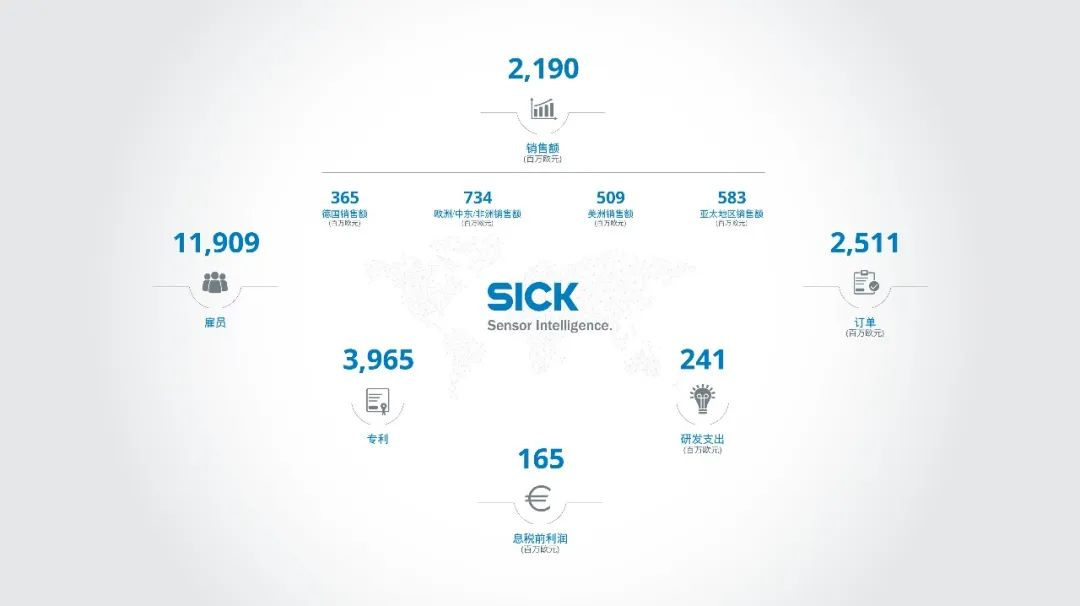
With orders of 2.511 billion euros and turnover of 2.19 billion euros, this record further proves the strong demand for intelligent sensor solutions for industrial digitalization. EBIT of 165 million euros, overall strong financial situation and stable earnings. The number of employees worldwide increased by 8% to 11,909. The company continues to invest in improving its innovation capabilities, and more than 100 new patents were applied for in 2022, of which more than 50% were software- and artificial intelligence-assisted sensor solutions.

SICK AG regards stable delivery capabilities as a top priority and actively promotes business development. Turnover increased by 11.5% to 2.19 billion euros, not only breaking the 2 billion mark for the first time, but also far exceeding expectations. In addition, the order volume also increased by 8.2% to 2.511 billion euros. The group profit was 120 million euros.

The global economic instability caused by the war in Ukraine, supply chain disruptions, inflation, rising energy and raw material prices, and COVID-related restrictions made the 2022 fiscal year challenging.

Dr. Mats Gökstorp, Chairman of the Board of SICK AG, said: “The 2022 fiscal year was marked by numerous challenges to the socio-economic and company operations due to the tight procurement market, especially the impact of high costs on profit margins. On behalf of the entire Board of Directors, I would like to thank all SICK employees who work hard every day to overcome new challenges and find flexible and creative solutions for our customers. Our focus is on ensuring delivery capabilities and maintaining customer relationships while being cost-conscious. We will continue to implement this strategy in 2023 and meet new demands for sensors and digital solutions with ever-increasing innovation capabilities.”

Sensor industry development status

According to the German Association for Sensor and Measurement Technology (AMA), the sensor industry showed a positive development trend in the 2022 fiscal year.

Despite the economic and political uncertainties that affected the sensor industry, turnover in the third quarter of 2022 increased by 10% compared to the same period last year. The strong demand for sensor solutions for industrial applications is also reflected in SICK’s balance sheet.

The turnover growth was relatively balanced in the three business areas: factory automation (+12%), logistics automation (+12%) and process automation (+10%). The efforts made around the world to make better use of limited resources are reflected in the increasing level of industrial automation, and SICK has been committed to developing technical solutions since its founding in 1946.

SICK Industrial Digital Solutions

SICK adheres to its innovation strategy and spent 11% of its turnover (241 million euros) in research and development in the 2022 fiscal year. SICK focuses on sensor intelligence solutions and uses sensor technology to support the control of digital and automated industrial processes and the protection of humans and the environment. In 2022, SICK continued to develop and gradually became a complete solution provider with sensor products, systems, software, artificial intelligence and services.

SICK applied for 122 patents in the 2022 fiscal year (35% more than the previous year), more than half of which are in the fields of software and artificial intelligence. With the networking capabilities of sensor technology and data property rights, SICK has become an important technology partner in the field of industrial digitalization.

A standout product innovation in 2022 is the image-based code reader Lector85x, which integrates software and artificial intelligence support. With a 12.4-megapixel image chip and high computing power, codes can be recognized at speeds of up to 3.5 m/s. For example, the code reader can be used in logistics centers or for airline baggage sorting.

SICK uses the Augmented Reality solution for manufacturing in the SARA application released in 2022: The SICK Augmented Reality Assistant is the first solution in an industrial environment to combine sensor data and the real environment, thus enabling the visualization of process and diagnostic information directly in the workshop. The AR application helps field workers to parameterize and diagnose sensors.

In addition, SICK is also launching products in the energy transition market segment in 2022, including the FLOWSIC500: The ultrasonic gas flowmeter is now able to measure hydrogen mixtures reliably and safely. This allows existing plants to be upgraded for an important energy carrier (hydrogen) and to be future-proof.

An important part of SICK’s innovation strategy is the start-up community within the Group, which, after a “business idea pitch” and a screening process, will be joined by six more start-ups in 2022. The start-ups validate new market opportunities in a targeted manner based on rapid customer feedback. As a result, topics such as hyperspectral image processing and neural networks are no longer just dreams of the future, but are already being adopted by SICK start-ups and are influencing future product development.

Sustainability as a whole

In fiscal 2022, SICK adhered to its overall sustainability strategy in the area of ​​”Environment, Society and Governance (ESG)” and achieved the set targets. SICK’s understanding of sustainability encompasses corporate responsibility for its employees, the environment, economic success and society. In the area of ​​climate and environment, SICK wants to reduce energy consumption by 0.5% per year compared to the previous year, which it has already achieved in 2022 through various efficiency measures.

Green electricity has been used throughout the German plants for ten years and will be rolled out to all plants worldwide by 2025. As a supplier of digital sensor solutions, SICK analyzed the energy-saving potential of its IT infrastructure and developed a holistic approach in 2022.

The key to the company’s success lies in its employees, and SICK wants to be an attractive workplace now and in the future. In 2022, SICK signed the “Diversity Charter”, which clearly stated its willingness and importance to promote diversity in all areas.

In addition, a project was launched with “MentalHealth@SICK” to sustainably implement mental health measures in daily working life and to destigmatize the topic of “mental health”. In addition to employee health, training and lifelong learning have also been of great significance since the company was founded. More than 82,000 training courses were successfully held through the company’s in-house SICK Sensor Intelligence Academy (SIA), and last year 373 trainees obtained their industrial digitalization qualifications at SICK.

In 2022, SICK was named Germany’s “Great Place to Work”® for the 20th consecutive time in an anonymous survey. “All in all, it’s a very good place to work” – 91% of SICK employees surveyed agree with this statement. SICK’s companies in the United States, Sweden and India were also rated “Great Place to Work”® for their workplace culture.

In terms of corporate governance, SICK took preventive measures in 2022 to fulfil its obligations under the Act on Due Diligence Obligations of Companies in the Supply Chain. This includes, in particular, the establishment of a risk management system to ensure that SICK’s own business areas, direct component suppliers and indirect component suppliers fulfill their due diligence obligations in terms of human rights and the environment. In 2021, the “Integrity Line” was established to anonymously report compliance violations in order to protect the company from damage and increase the trust of employees and business partners in SICK’s values.
Related product recommendations:
GE IS410JPDHG1A
GE IS400JGPAG1A
GE IS420UCSCS2A-B-V0.1-A
GE IS420UCSCH1A
GE IS410STAIS2A IS400STAIS2AED
GE IS420UCSBH4A
GE IS215UCVHM06A
GE IS420ESWBH2A
General Electric IS400AEBMH3A
GE IS420ESWAH3A
GE IS420ESWBH2A
GE IS410JPDHG1A IS400JPDHG1ABB
GE IS420UCECH1B
GE IS420YDOAS1B
GE IS420UCECH1B-A
ABB PFSA140, 3BSE006503R1
ABB PFSK142 3BSE006505R1
ABB PFSK151
ABB PFSK130 3BSE002616R1
ABB PFSK160A 3BSE009514R1
ABB PFSK162 3BSE015088R1
ABB PFSK164 3BSE021180R1
ABB PFSA140 3BSE006503R1
SBS PFSK165 VP74201-933CW07
ABB PFSK151 3BSE018876R1
ABB PFSK152 3BSC980006R361
ABB SBS PFSK165 3BSE027778R1
More…

Search for products

Back to Top
Product has been added to your cart